A marble fireplace wall is one of the clearest luxury signals in a living room. It can make the fireplace feel sculptural, brighten the room, add movement, and create a focal point that feels permanent rather than decorative. In Vancouver homes, many clients want the marble effect without the weight, seams, or constraints of real stone slabs.
This page focuses on marble fireplace walls, marble-look plaster, seamless surrounds, and stone-inspired luxury finishes. It complements the dedicated Marble Look Fireplace Wall Vancouver page by addressing broader marble fireplace intent and helping homeowners compare visual directions before requesting a finish recommendation.
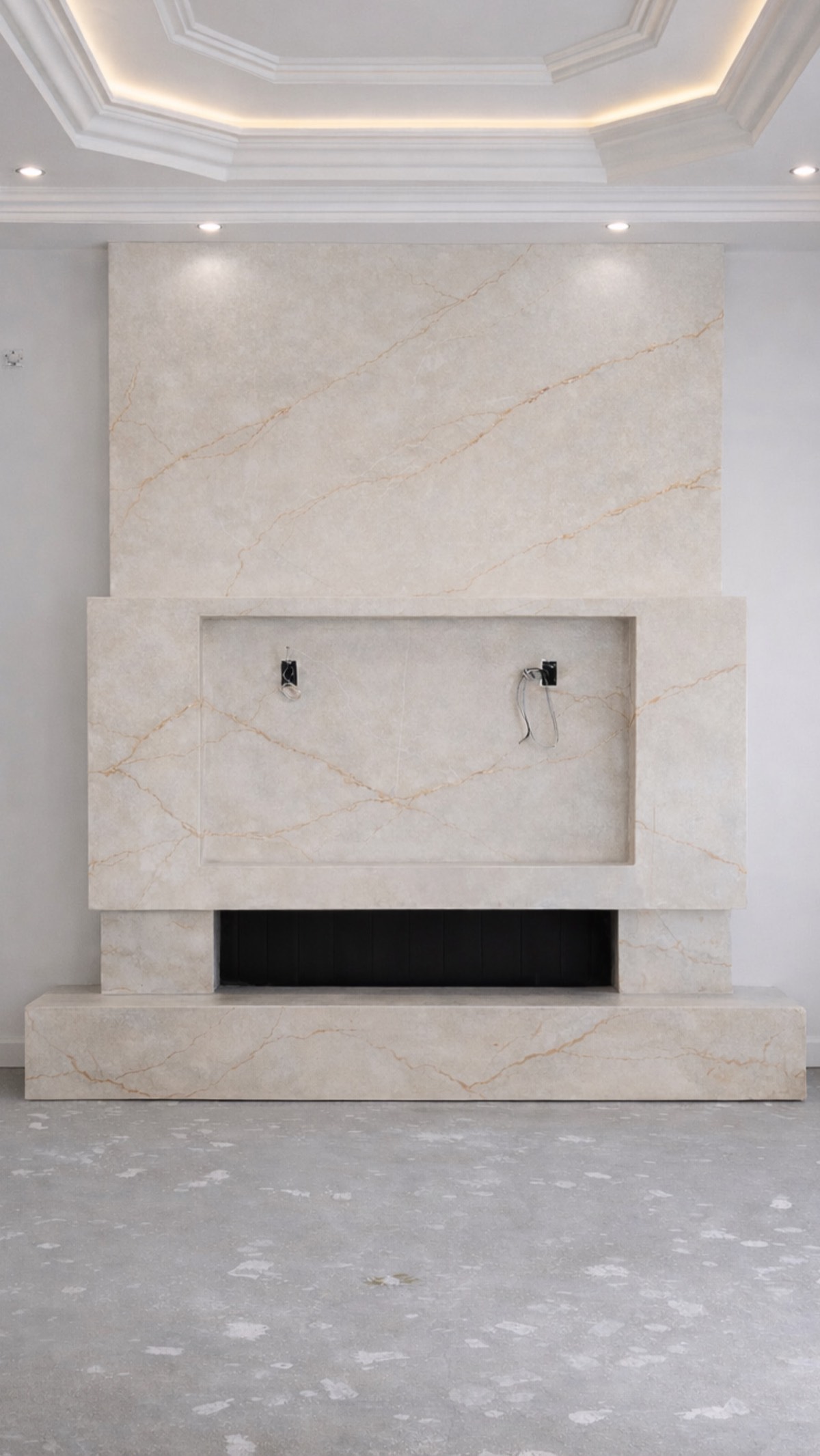
Why Homeowners Choose Marble Fireplace Walls
Marble has a strong association with permanence, architecture, and luxury. Around a fireplace, that effect becomes even stronger because the wall already acts as the emotional center of the room. A marble-inspired wall can add movement without adding furniture, art, or clutter.
The best marble fireplace walls feel controlled. Too much contrast can look busy, while too little movement may look like a plain painted wall. The finish direction should be chosen around room size, fireplace width, lighting, ceiling height, and surrounding materials.
Real Marble vs Marble-Look Plaster
Real marble is beautiful, but it can be expensive, heavy, and limited by slab size, seams, availability, and installation logistics. Marble-look plaster or Venetian plaster can create a seamless surface with more control over movement, tone, and scale.
This does not mean plaster replaces natural stone in every situation. It is the better direction when the goal is a continuous fireplace wall, a custom movement pattern, a softer stone feel, or a finish that wraps details more gracefully than slab material.
Seamless Fireplace Surrounds
Marble-look finishes are especially useful around fireplace surrounds because they can reduce visual breaks. Instead of tile joints or separate panels, the finish can make the firebox area feel more integrated. This is valuable in modern interiors where the fireplace should feel clean and architectural.
For surround-specific detailing, see Venetian Plaster Fireplace Surround Vancouver.
Marble TV Fireplace Walls
A marble fireplace wall can work with a TV, but the movement should be restrained. Strong veining behind a large screen may compete with the TV, while softer marble movement can keep the wall elegant. If the room needs a media fireplace composition, compare TV Fireplace Wall Vancouver.
White, Warm, Grey, and Dark Marble Directions
White marble effects can brighten a room and feel classic. Warm beige or taupe movement works well with oak, cream furniture, and softer interiors. Grey marble effects feel cooler and more contemporary. Dark marble effects can be dramatic, especially when paired with lighting and a linear fireplace.
For dark stone-inspired direction, review Black Fireplace Wall Vancouver.
Cost and Planning Considerations
Marble-look fireplace walls often sit above simpler plaster walls because they require more design judgment, layering, movement control, and finish time. Wall size, firebox details, returns, edge conditions, and lighting all affect pricing. For broader pricing context, review Venetian Plaster Cost Vancouver.
Marble Fireplace Finish Directions
Soft White Marble Look
Bright, refined movement for modern and transitional rooms.
Warm Stone Movement
Beige and taupe tones that pair with wood and softer interiors.
Grey Marble Effect
A cooler architectural direction for contemporary homes.
Dark Marble Fireplace
A dramatic luxury direction for high-contrast rooms.
Choosing the Right Marble Direction
Marble fireplace walls can be quiet or dramatic. A soft white marble look can brighten a Vancouver condo and make the fireplace feel elegant without adding heaviness. A warm beige or taupe marble effect can work beautifully with oak, cream upholstery, and transitional interiors. Grey marble movement feels cooler and more modern, while dark marble effects create a stronger architectural statement.
The scale of the wall should determine the movement. Smaller fireplace surrounds usually need softer veining and less contrast. Full-height fireplace walls can support larger movement because the finish has room to breathe. If the marble effect is too busy on a small wall, it can compete with the firebox, TV, furniture, and lighting. If it is too subtle on a large wall, the project may not deliver the luxury impact the homeowner wanted.
Lighting also changes marble-look finishes. Side lighting can reveal texture and movement, while strong overhead lighting may flatten the wall or create glare. When the fireplace wall includes a television, the marble movement should be planned carefully so it does not distract from viewing.
When Marble-Look Plaster Makes Sense
Marble-look plaster makes the most sense when a homeowner wants the emotional effect of marble but needs a more continuous, custom, or adaptable wall finish. It can be useful around long linear fireplaces, fireplace surrounds with returns, full-height focal walls, and rooms where slab seams would interrupt the design.
In Vancouver and Lower Mainland homes, this direction is often chosen for living rooms, formal sitting areas, luxury condos, and open-plan great rooms where the fireplace is visible from multiple areas. It can also help builder-basic fireplaces feel more permanent and integrated without adding bulky stone or tile transitions.
The finish still needs thoughtful planning. Marble-look plaster is usually a premium option because the movement, layers, and finish judgment require more time than a simple matte surface. A photo of the wall, approximate dimensions, and a sense of the desired mood are enough to begin narrowing the direction.
Planning a Realistic Marble-Look Result
A successful marble-look fireplace wall should feel intentional from normal viewing distance, not only in a close-up sample. The movement needs to align with the firebox, the wall height, and the way people enter the room. If the fireplace is low and linear, horizontal calm may be better than strong vertical veining. If the wall is tall and narrow, vertical movement can help the surface feel more architectural.
It is also important to decide how perfect the surface should feel. Some homeowners want a refined stone-like wall with controlled movement, while others prefer a more organic hand-finished look. Both can be premium, but they communicate different moods.
Frequently Asked Questions
Is marble-look plaster real marble?
No. It is a decorative plaster finish designed to create marble-inspired movement without using full stone slabs.
Why choose marble-look plaster over real marble?
It can create a seamless surface, reduce slab constraints, and allow more control over tone and movement.
Can a marble fireplace wall work in a condo?
Yes, if the movement and contrast are scaled to the room. Softer marble effects often work better in compact spaces.
Can a TV go on a marble fireplace wall?
It can, but the finish should be restrained enough that veining does not compete with the screen.
Is marble-look plaster expensive?
It is typically a premium finish because it requires more layering, movement control, and finish judgment than simpler plaster walls.
Can I preview whether marble-look suits my wall?
A wall photo helps assess scale, lighting, firebox proportion, and whether a marble direction will feel balanced.
Get a Finish Direction for Your Space
Send a photo of your wall and receive a personalized finish recommendation and planning range.
Get Estimate from Your Wall